Try this: Fill part of a ten-frame, then ask, “How many spaces are still waiting?” Let children move counters to check their thinking.
Start with something children can see
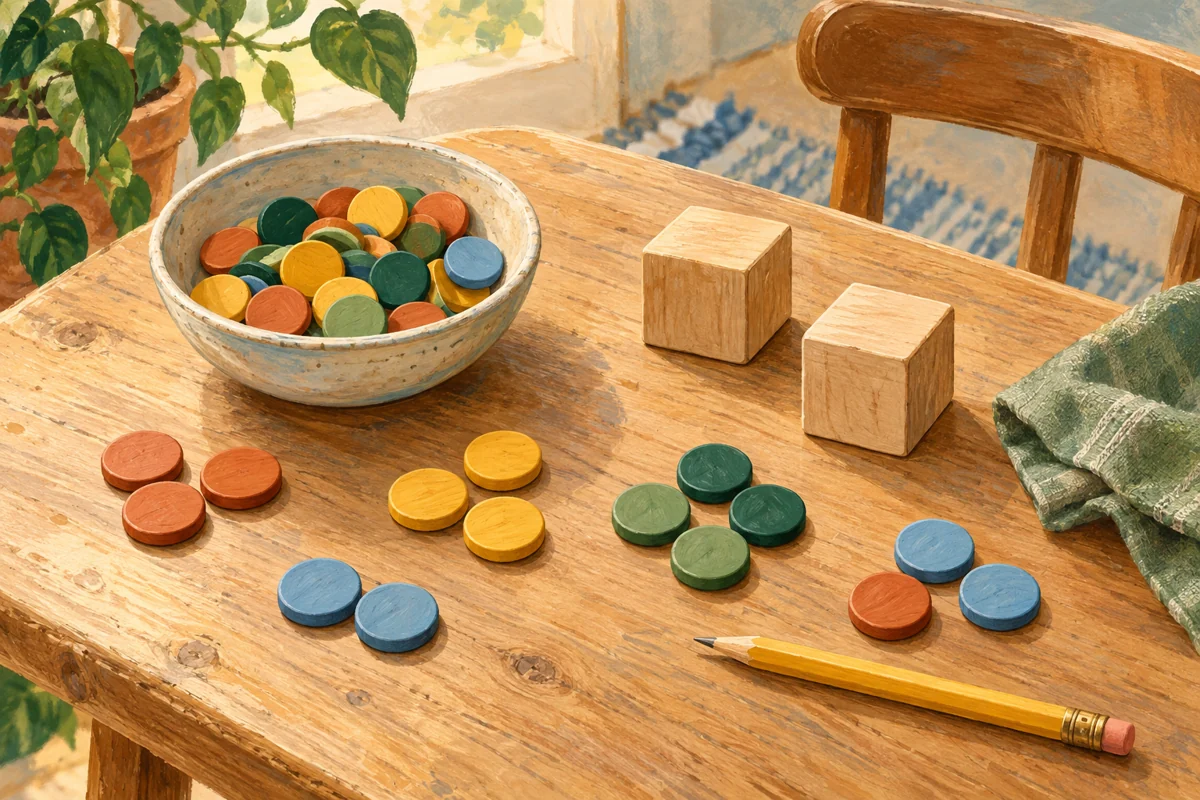
Draw a rectangle with two rows of five boxes. Find ten counters, buttons, or paper circles. At home, a small bowl makes a handy place for the spare pieces. In a classroom, pairs can share one frame. Choose materials suitable for your learners and supervise small pieces.
Place six counters in the frame: fill the top row, then put one in the bottom row. Say, “This frame has room for ten. Six places are filled. How many more counters would fill it?” Pause before offering a hint. Children may count the empty boxes, notice four spaces beside the lone counter, or bring over counters one at a time. Each approach gives you something to talk about.
A short conversation to try
Adult: “How many counters do we have?”
Child: “Six.”
Adult: “And how many spaces are empty?”
Possible answer: “Four. One, two, three, four.”
Adult: “Let’s fill them and check. Six and four make ten.”
Keep the frame in view while you say the number sentence. If writing equations is appropriate, record 6 + 4 = 10 beside it. The symbols should describe the arrangement the child just explored.
Change one thing
Move one counter out of the frame. Ask what changed. Five are now filled and five are empty. Put that counter back, then add another: seven are filled and three are empty. Can the child explain why the number of empty spaces went down?
Try a partner game. One person arranges a number of counters; the other works out how many more would fill the frame. Swap jobs after checking together. There is no need to race. The useful part is seeing the relationship and describing it.
If the answer is a guess
Return to the empty boxes: “Show me the spaces we still need to fill.” Offer one counter for each empty space. Then count the added group together. Avoid making a child repeat an incorrect guess; let the model give them a way to revise it.
For a smaller start, cover one row and work on filling five. For a stretch, ask children to find two different ways to make ten and show what changed between them. Keep both arrangements visible while they compare.
One quick check before moving on
Show eight counters in the frame. Ask, “How many more? How do you know?” Two is the missing amount. An explanation might be “I see two empty boxes,” or the child may point to both spaces. Pointing can show the idea even when the words are still developing.
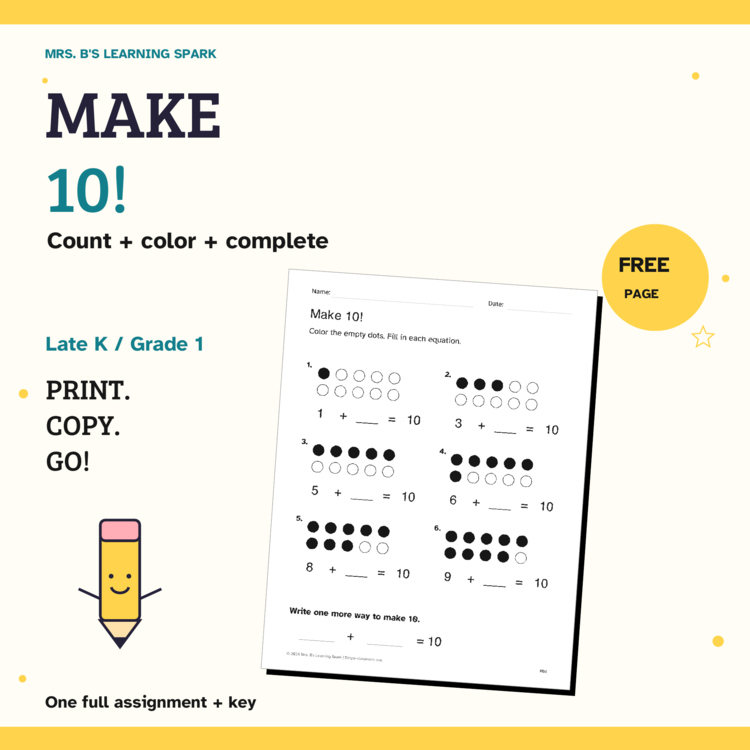
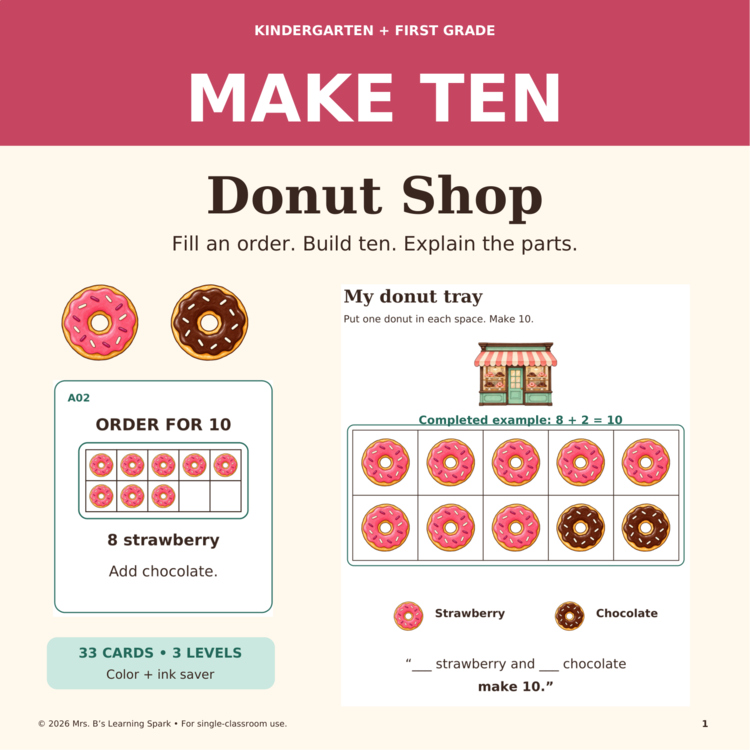
You can try the free making-ten worksheet for another representation. If a pretend-shop activity suits your group, explore the Making Ten Donut Shop center. The conversation above also works with your own drawn frame.