Try this: Build a short word from sound-spellings the child already knows. Model saying the sounds close together, then blend them into a whole word.
Choose the word before the activity
A CVC word has a consonant-vowel-consonant pattern, such as sat, map, or sit. Choose spellings that have already been introduced in the child's reading instruction. A game should give practice with familiar knowledge, rather than ask the child to guess unfamiliar sounds.
Write s a t on three small pieces of paper. Leave a little space between them. You can work at a classroom table or sit beside a child at home; no special equipment is needed.
Make the blending visible
Point to s and say its sound. Move to a, using the short vowel sound, then to t. Model bringing the sounds together: /s/ /ă/ /t/, sat. Keep /s/ and /ă/ close together and make the final /t/ brief. Avoid adding an extra “uh” to each consonant, which changes what the child is trying to blend.
Adult: “Watch me follow the letters: /s/ /ă/ /t/. Sat.”
Adult: “Let’s try it together.”
Next prompt: “Now you follow the letters and say the sounds.”
Give another model if needed. When the child says the word, use it naturally in a sentence: “The cat sat.” You can discuss its meaning after the blending, so the picture or sentence does not become the main way to guess it.
Change just one sound
Replace s with m to make mat. Ask, “Which letter changed? What sound will we start with now?” Blend the new word. Then change the vowel to make met, but only if that short vowel spelling is familiar.
A smaller word chain is enough for one sitting. Two or three words practiced carefully can give you more information than a long list rushed through. Ask the child to point to the spelling that matches each sound as you revisit a word.
If the child guesses or gets stuck
Bring attention back to the letters: “Let’s check every sound.” If a sound-spelling is not known, supply it or choose a different word. If the separate sounds are accurate but blending is difficult, model them closer together and blend with the child. Match the language and sequence used in their reading instruction where possible.
For a child ready for another job, say sat and invite them to build it with the cards. Then blend it to check. This reverses the task: now they are identifying the sounds in a spoken word and choosing the spellings.
End with a word they can explain
Return to one practiced word. Ask the child to read it and tell you which letters helped. A useful response might be a blend followed by “It starts with /m/.” Keep the focus on connecting the print and sounds.
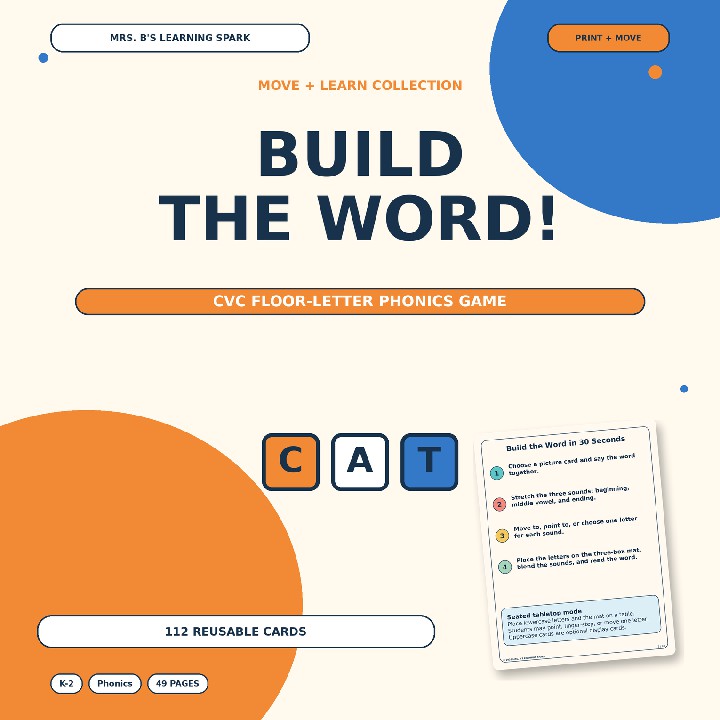
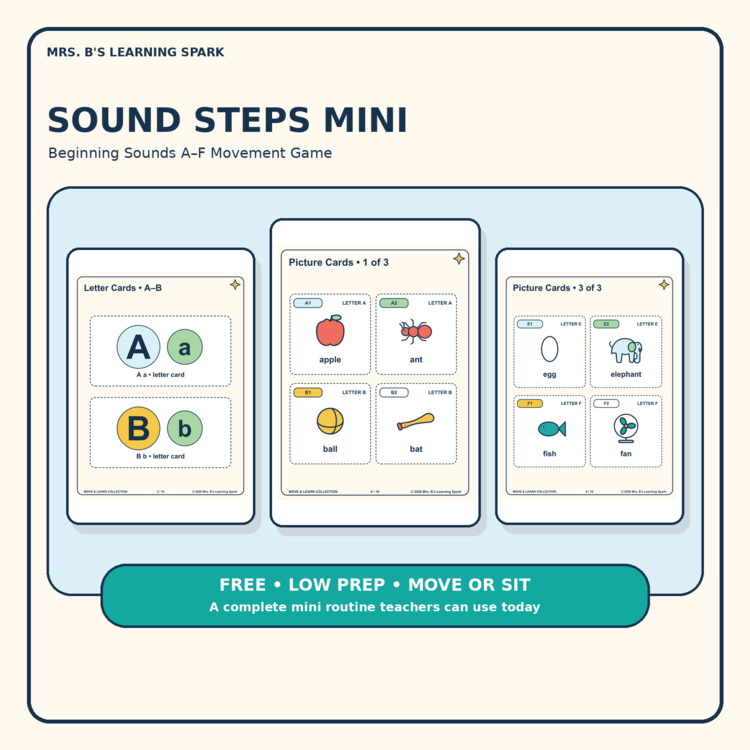
The CVC Word Building Game offers another way to practice with short-vowel words. For a separate starting-sound activity, try the free beginning-sounds game; beginning-sound matching is a different task from blending a whole word.